

Enterprise events are one of the most valuable opportunities for businesses to create new relationships, generate demand, and build sales pipelines.
Trade shows, exhibitions, and conferences bring together thousands of potential customers, partners, and industry decision-makers in a short period of time. For many organizations, these events represent significant investments in marketing, sales resources, travel, and brand visibility.
However, the success of an event is not determined by the number of contacts collected.
The real challenge begins after the event ends.
- How does an enterprise organize thousands of conversations?
- How does it ensure every lead reaches the right team?
- How does it preserve the context behind each interaction?
- How does it turn event activity into measurable business opportunities?
Enterprise event lead management is fundamentally a process challenge. Lacking a structured system scatters valuable conversations across business cards, spreadsheets, and notes, causing delayed follow-ups and lost opportunities.
Thus, modern enterprises require an efficient event lead management solution.
Why Enterprise Event Lead Management Is More Complex Than Traditional Lead Capture
Managing event leads at enterprise scale involves multiple teams, processes, and systems.
Unlike smaller businesses where one person may handle follow-ups, enterprises typically have:
- Multiple sales representatives
- Regional teams
- Marketing departments
- Product specialists
- Business development teams
- CRM administrators
This creates several operational challenges.
- Multiple Sources of Lead Data: Event data originates from disparate sources like business cards, badge scans, website inquiries, meeting registrations, rep notes, and manual spreadsheets, making unified prospect views difficult.
- Lack of Lead Ownership: Unclear post-event responsibility regarding who follows up, which sales team handles opportunities, and current outreach status leads to delays or duplicate communication.
- Missing Conversation Context: Effective outreach requires understanding discussed topics, prospect challenges, product interests, and promised actions rather than relying solely on contact info.
Why Traditional Methods Fail at Enterprise Scale
Many organizations still depend on manual processes to manage event-generated leads. While these methods may work for smaller events, they become inefficient the moment lead volume climbs into the hundreds or thousands.
Business Cards Create Data Gaps
Business cards provide basic contact information but rarely capture customer requirements, buying intent, discussion points, or follow-up expectations. The most valuable part of an event interaction often disappears the moment the card goes into a pocket.
Spreadsheets Lack Real-Time Collaboration
Spreadsheets can store information, but they do not provide clear ownership, activity tracking, conversation history, or automated workflows. As multiple teams access and update the same file, maintaining accuracy becomes difficult.
Delayed Follow-Ups Reduce Conversion Potential
Event conversations have momentum. When teams take days or weeks to organize information, the connection created during the event starts losing value. Enterprises that adopt dedicated post event lead follow up software ensure sales teams can act while the conversation is still relevant.
What an Effective Enterprise Event Lead Management System Should Include
A scalable event lead management system needs to support the complete lead lifecycle, from initial interaction to sales conversion. It should not only capture contacts but also help enterprises organize, distribute, and activate event data.
Centralized Lead Capture
A reliable event lead capture software should capture important information during the event itself. This includes:
- Contact details
- Company information
- Event source
- Responsible team member
- Interaction details
Centralized lead capture ensures important information is available across the organization instead of remaining with individual representatives.
Conversation Context Management
The strongest enterprise lead management systems capture more than contact information. They preserve the context behind every interaction.
This includes:
- Customer challenges
- Product interests
- Requirements discussed
- Business priorities
- Follow-up commitments
This information helps sales teams approach prospects with relevant conversations rather than generic outreach.
Lead Segmentation and Prioritization
Not every event lead has the same potential. Enterprise teams need the ability to categorize opportunities based on:
- Industry
- Region
- Interest level
- Purchase timeline
- Business opportunity size
Prioritization allows sales teams to focus their resources on opportunities with the highest potential.
Lead Assignment and Access Control
Large organizations need structure around information access and ownership.
A proper enterprise event lead management system should define:
- Who owns each lead
- Who can access information
- Which team handles follow-up
- How progress is tracked
This creates accountability while ensuring teams have the information they need.
CRM Integration
Event lead management should not operate separately from sales systems. Integration with CRM platforms allows enterprises to:
- Maintain accurate customer records
- Track opportunities
- Monitor sales activities
- Run consistent trade show ROI measurement across every event
This ensures event data becomes part of the broader customer acquisition process rather than remaining isolated after the event.
The Enterprise Event Lead Management Process
A successful approach involves three stages.
Before the Event
Preparation determines the quality of lead management. Organizations should define lead qualification criteria, required data fields, team responsibilities, and follow-up workflows in advance. This creates consistency across the event team before the first badge is scanned.
During the Event
The focus should be on capturing meaningful interactions — contact information, conversation details, customer requirements, and follow-up actions. The objective isn’t only to collect leads but to create usable sales intelligence in real time.
After the Event
The post-event process determines whether opportunities move forward. Teams should review captured information, assign ownership, prioritize opportunities, begin follow-ups, and update CRM records. A structured post-event workflow is what turns event activity into measurable business outcomes.
How AI Is Improving Enterprise Event Lead Management
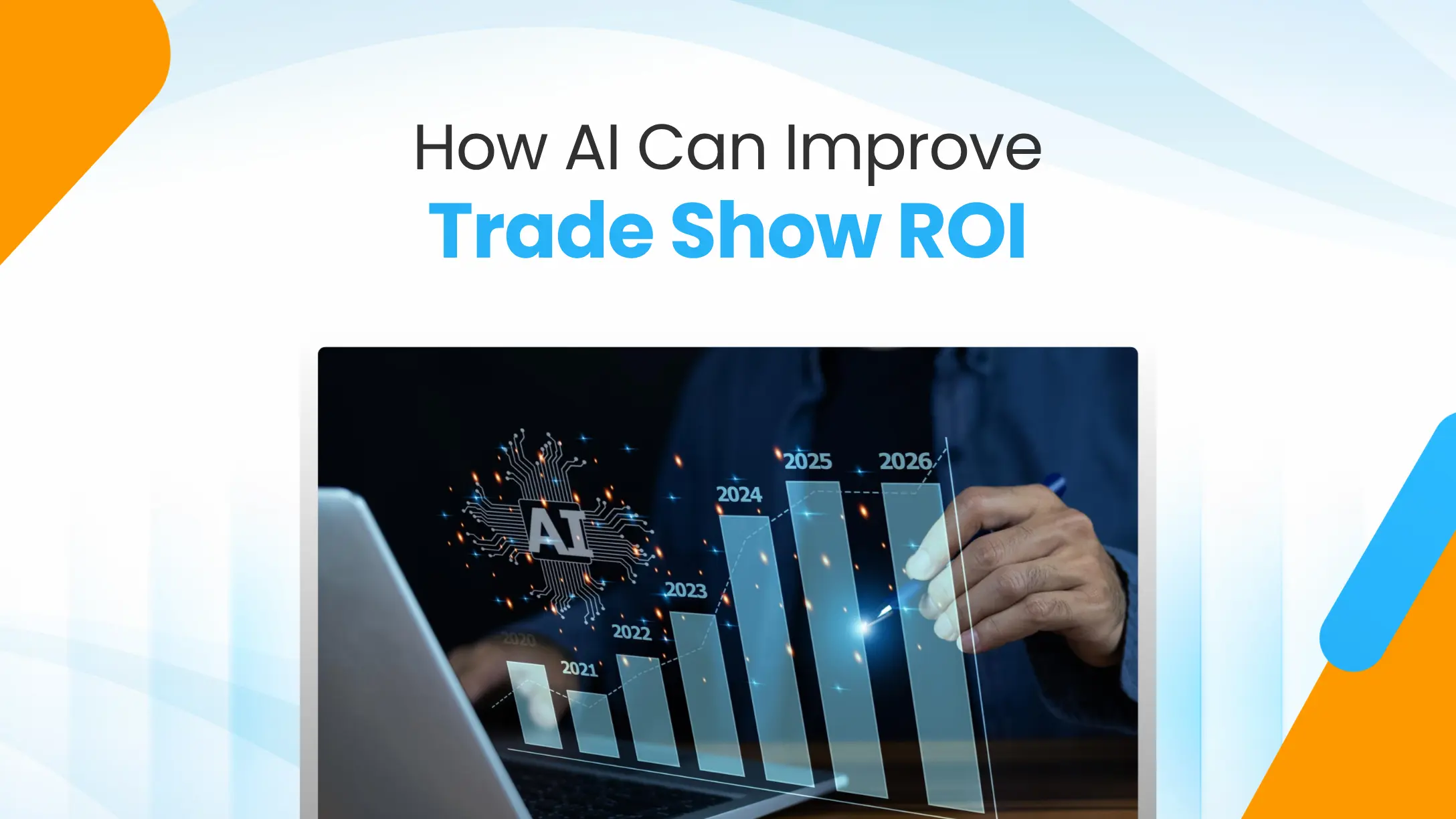
Artificial intelligence is helping organizations reduce manual effort and improve the quality of event data through faster data capture from business cards and badges, better accuracy from automated data processing, immediate context preservation through conversation notes, and improved sales readiness through structured information.
AI doesn’t build the relationship. It makes sure nothing said in that relationship gets lost before someone acts on it.
How AI CardVault Helps Enterprises Manage Event Leads Seamlessly
Most tools stop at digitizing a business card. AI CardVault starts there and keeps going.
- Scan once, in any language. Working as a multilingual business card scanner, AI CardVault’s OCR reads business cards and badges across dozens of languages, pulling contact details, company, and title straight into a structured record with no retyping, no pile of cards forgotten in a blazer pocket after the flight home.
- Capture leads even offline. Trade show floors are notorious for dead wi-fi and patchy signals. AI CardVault captures leads without an internet connection and syncs everything automatically the moment the device reconnects, no data loss, no duplicate entries.
- Voice notes become searchable context. Right after a booth conversation, a rep can speak a quick note: what the prospect needs, what timeline they’re on, what was promised. That note attaches directly to the lead, so whoever follows up three weeks later isn’t starting from a name and a phone number.
- Every lead reaches the right CRM automatically. Captured leads sync in real time to Walkins, BiZio, Salesforce, HubSpot, Zoho, and other CRM platforms, so event data doesn’t sit in a separate app that nobody opens again after week one.
The result: the sales team opens their CRM on Monday morning to leads that already have context, ownership, and next steps attached, not a spreadsheet someone has to reconstruct from memory.
Conclusion: Enterprise Growth Depends on Managing Conversations Effectively
For enterprises, events represent significant opportunities to build relationships, generate demand, and create new revenue channels. However, collecting thousands of leads is only the beginning.
The real value comes from how effectively those conversations are organized, managed, and converted into business opportunities.
A structured enterprise event lead management system helps organizations maintain customer context, improve collaboration, accelerate follow-ups, and maximize the return from every event investment.
A stack of business cards is only a collection of contacts. A structured lead record is a business opportunity waiting to be developed.
Enterprises that succeed after events are not necessarily the ones that collect the most leads.
They are the ones that build a system to understand, manage, and act on every conversation.
Start by centralizing lead capture during the event itself (contact details, company info, and conversation notes), then assign clear ownership so every lead has one responsible rep, and sync everything into your CRM right away. The key is preserving context — not just contact info — so follow-up can be relevant instead of generic. A structured post-event workflow (review, prioritize, assign, follow up) is what actually converts event activity into pipeline.
Manually sorting stacks of business cards leads to data gaps and delayed follow-up, since cards capture contact info but not the actual conversation or buying intent. A better approach is scanning cards digitally at the point of contact — ideally with OCR that works across languages and syncs offline — so details land directly in a structured, shareable record instead of a pocket or a drawer.
Usually because lead data is scattered across business cards, spreadsheets, and individual reps’ notes with no clear ownership or centralized system. Without a defined process for who follows up and by when, conversations lose momentum, context gets forgotten, and leads sit untouched until the interest has cooled.
This requires a lead capture tool built with native CRM integration rather than a standalone app or spreadsheet you’d have to export manually. Leads captured at the event — including notes and context — should sync automatically in real time, so your sales team finds fully-formed records with ownership and next steps already attached when they open the CRM.