

Trade shows and conferences are designed around movement.
People move between booths, presentations, networking sessions, coffee meetings, and product demos throughout the day. Conversations happen quickly. Introductions overlap. New contacts arrive one after another with very little pause in between.
In these environments, lead capture becomes less about collecting information and more about keeping up with the pace of interaction itself.
That is where many event workflows begin to struggle.
Not because professionals are not meeting the right people. In most cases, the opportunities are already there. The difficulty comes later, when dozens of conversations start blending together and important details become harder to reconnect.
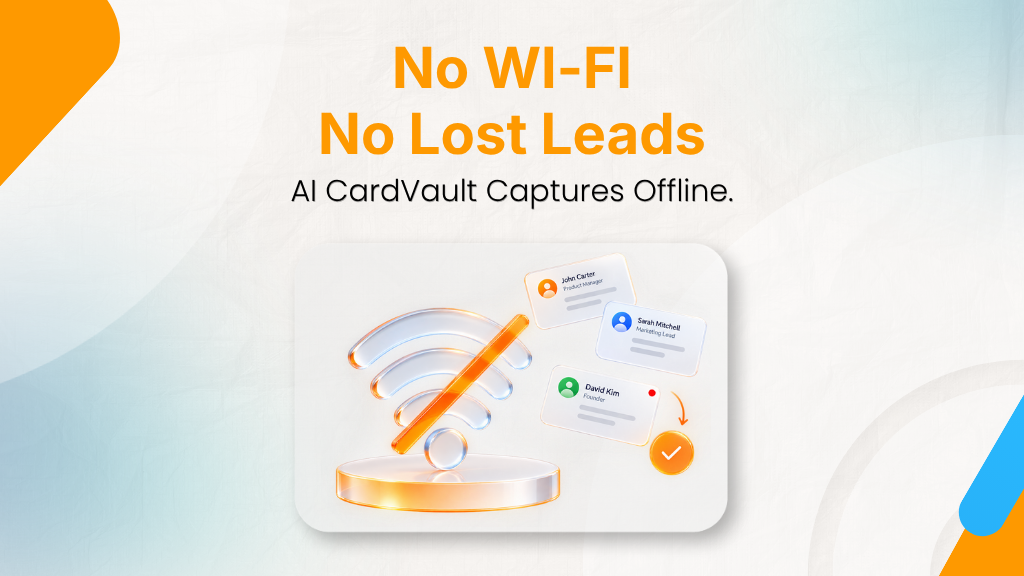
This is one of the reasons offline-first lead capture is becoming more important at trade shows and conferences. Modern event environments require systems that continue working naturally regardless of connectivity conditions. That shift is pushing more businesses toward offline-first lead capture workflows designed specifically for live networking environments.
The shift is not happening because offline capability sounds impressive as a feature. It is happening because event environments rarely behave like controlled office environments. Connectivity changes constantly, networking volume is unpredictable, and professionals need systems that continue working without slowing the interaction itself.
Solutions like AI CardVault are built around this exact reality. Instead of treating offline functionality as a backup mode, the system is designed to continue capturing and organizing lead information naturally, even inside crowded, low-network event environments.
The Reality of Networking at Large Events
Most professionals walk into conferences prepared to network. Few prepare for the operational load that comes with managing large numbers of conversations within a short time.
A typical day at a trade show often looks like this:
You meet someone near a booth and exchange cards while discussing a partnership opportunity. Minutes later, another conversation starts near a presentation stage. Then another during lunch. Then another while walking between sessions.
By the end of the day, there may be thirty or forty new contacts connected to different discussions, priorities, and follow-up expectations.
The challenge is not remembering faces.
The challenge is preserving context.
A business card alone rarely captures the actual value of the interaction. The useful information usually sits inside the conversation itself:
- What problem were they trying to solve?
- Did they ask for pricing?
- Was a follow-up meeting discussed?
- Were they a decision-maker or part of a larger team?
- Was the discussion urgent or exploratory?
Without structured capture during the interaction, these details become harder to recover later.
That is why lead capture systems used during events need to support continuity while conversations are still happening.
Tools such as AI CardVault help reduce this friction by allowing professionals to capture cards, attach notes, and structure lead information immediately while the interaction is still fresh.
The Event Technology Challenges Most People Experience Quietly
Most event technology discussions focus on registrations, QR badges, mobile apps, and event engagement systems. The day-to-day networking friction experienced by attendees receives much less attention.
One of the most common issues is unstable connectivity inside crowded venues.
Convention centers, exhibition halls, and conference spaces place thousands of devices inside a relatively limited network environment. Public WiFi becomes overloaded quickly, while cellular signals often weaken inside large concrete structures.
This affects more than internet speed. It changes how people behave during conversations.
Professionals start postponing tasks that should happen immediately. Instead of organizing contact information during the interaction, they take quick photos of business cards and move on. Notes are scattered between apps. Follow-up details are saved mentally with the intention of sorting everything later.
The problem is not the temporary lack of the internet itself.
The problem is the amount of information that begins to separate from its original context during the delay.
After a full event day, many attendees return with dozens of contact photos but very little structured clarity attached to them.
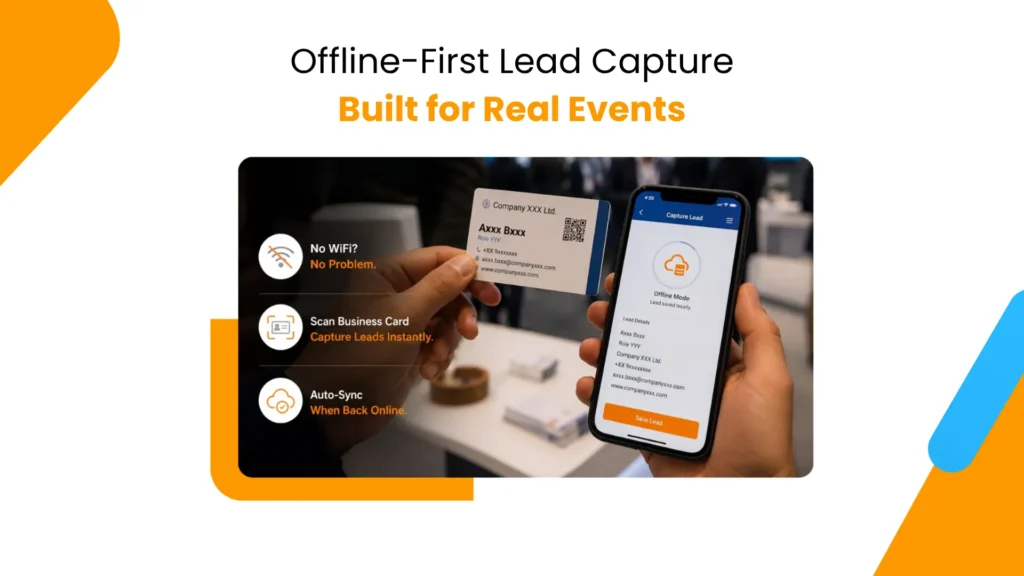
This is where offline-first systems make a noticeable operational difference. AI CardVault, for example, continues storing and organizing lead data locally on the device, allowing users to continue networking without depending on venue connectivity.
Why Offline-First Workflows Matter
Offline-first systems are designed on the assumption that connectivity may not always be available when work needs to happen. That changes the networking experience significantly.
Instead of relying on an active internet connection to capture or organize information, the system continues to operate locally on the device. Contact details, notes, and lead information remain available immediately during the conversation itself.
This creates a smoother workflow at events because the interaction no longer depends on the venue’s infrastructure.
Professionals can stay focused on the discussion instead of monitoring signal strength, retrying uploads, or reopening cloud-dependent applications. The result is not simply convenience.
It is continuity. Conversations continue naturally while the information stays organized in parallel.
AI CardVault follows this offline-first approach by allowing lead capture, note storage, and structured organization to continue even when internet availability changes throughout the event.
Capturing Context While It Still Exists
One of the biggest advantages of offline-first lead capture is timing.
The most accurate information about a conversation exists immediately after it happens.
At that moment, details are still clear:
- What was discussed,
- What follow-up was expected?
- What priority level the lead carried,
- and what made the interaction important.
Even small contextual notes become valuable later.
A short reminder, such as:
“Interested in reseller partnership.”
or
“Requested enterprise demo next week.”
can completely change the quality of a follow-up email days later.
Without structured capture during the interaction, many of these details disappear under the volume of additional conversations happening throughout the event.
Offline-first workflows help preserve this context before memory becomes overloaded.
This directly impacts post-event follow-up speed. When contacts, notes, and conversation context remain connected from the beginning, teams can continue discussions faster and with better clarity after the event ends. That is one of the reasons many event teams are moving toward systems like AI CardVault, where contextual notes, structured contacts, and lead details remain connected instead of being reconstructed afterward.
The Difference Between Contact Collection and Relationship Continuity
Many networking systems focus heavily on collecting as many contacts as possible.
The more important question is what happens after the event ends.
Large contact lists alone do not create business outcomes. Organized continuity does.
When lead information stays connected to conversation context, follow-ups become more relevant and easier to prioritize. Teams can continue conversations with clarity instead of reconstructing fragmented information afterward.
This becomes especially important for:
- sales teams managing high lead volume,
- founders meeting investors or partners,
- exhibitors handling booth traffic,
- recruiters speaking with candidates,
- and business development teams attending industry conferences.
In all of these cases, the quality of follow-up often depends on how well information was captured during the original interaction.
AI CardVault supports this workflow by keeping contacts, notes, and captured information structured together so that conversations remain easier to continue after the event ends.
Why Cloud-Only Systems Create Friction at Events
Many networking tools are designed around stable office conditions where internet access is always available.
Trade shows rarely operate that way.
At crowded events, even small delays create interruptions because conversations move quickly. Waiting for a scan to upload or reconnecting to a network may seem minor technically, but during live networking, those interruptions affect attention and flow.
People naturally shift toward faster workarounds.
That is why many attendees still rely on:
- photos of cards,
- handwritten notes,
- temporary screenshots,
- or delayed CRM updates.
The issue is not a lack of technology.
It is the mismatch between how some tools are designed and how real event environments actually function.
Offline-first systems reduce this dependency by allowing lead capture to continue regardless of current connectivity conditions.
With AI CardVault, information can continue syncing automatically once connectivity becomes available again, helping users maintain continuity without interrupting the networking process itself.
What Businesses Should Prioritize in Event Lead Capture Tools
As conferences and trade shows become more digitally integrated, businesses are starting to evaluate lead capture systems differently.
The focus is moving beyond simple scanning capability.
Reliability during live networking environments matters more.
A strong trade show lead capture workflow should support:
- local capture without internet dependency,
- structured organization during conversations,
- automatic syncing once connectivity returns,
- Note-taking is connected directly to contacts
- and workflows that prepare information for CRM follow-up later.
Speed also matters.
At events, every extra step increases the chance that information will be postponed, skipped, or disconnected from the original conversation.
The best systems reduce operational effort while keeping interactions natural.
This is where platforms like AI CardVault fit naturally into modern event workflows by combining offline scanning, structured lead capture, contextual note-taking, and automatic synchronization inside a single process.
Businesses are also prioritizing AI-powered OCR business card scanning because event environments require speed and accuracy together. Modern OCR systems can structure contact information instantly while reducing manual entry effort during busy networking sessions.
The Future of Event Networking Workflows
Trade shows and conferences continue growing in scale and networking density.
At the same time, expectations around follow-up speed are increasing. Attendees expect faster responses, clearer continuity, and more personalized communication after events.
This creates pressure on how lead information is captured and managed from the beginning.
Offline-first systems are becoming part of that shift because they support the way modern events actually function:
high movement, high interaction volume, and unpredictable connectivity.
The goal is no longer simply collecting business cards.
The goal is to maintain relationship continuity from the first conversation onward.
Systems like AI CardVault are increasingly being adopted in these environments because they support uninterrupted networking workflows while keeping lead information organized and ready for follow-up later.
Final Thoughts
Offline-first lead capture is becoming important for a simple reason:
Trade shows and conferences do not pause when connectivity becomes unstable.
Conversations continue. Opportunities continue. Networking continues.
The systems used during those moments need to support that reality without interrupting the interaction itself.
As event environments become more crowded and conversation volume continues increasing, businesses are starting to recognize that reliable lead capture is less about internet access and more about maintaining clarity while momentum is still active.
That is where offline-first workflows are quietly becoming essential.
And that is exactly the type of environment AI CardVault is designed to support.
Trade shows involve back-to-back conversations at high speed across crowded venues with unpredictable connectivity. Unlike regular meetings where you have time and stable internet, trade shows demand instant capture without any dependency on the venue’s network infrastructure.
Photos save a card but lose the conversation. Details like whether a prospect asked for a demo, mentioned budget, or requested a follow-up meeting exist only in memory — which fades quickly under the volume of a full event day. Structured capture keeps that context attached to the right contact from the start.
When thirty to forty conversations happen in a single day, details from earlier interactions blur into each other. Without structured notes captured during each interaction, follow-up emails become generic and disconnected from what was actually discussed, reducing response rates significantly.
Badge scanners capture basic registration data but miss conversation context entirely. Exhibitors handling booth traffic need to attach notes, priorities, and follow-up details to each contact in real time — something offline-first lead capture tools support directly during the interaction.